flash usdt, A Practical Guide to the New Flash USDT Method on ChainIDE
Key takeaways
- Flash USDT is a newly developed ERC20 token method on Ethereum.
- ChainIDE is used as the primary development environment for Flash USDT.
- MetaMask connects wallets to interact with Flash USDT smart contracts.
- The method involves smart contract deployment, token creation, and secure testing.
- Always verify contracts and test on networks before real transactions.
Flash USDT is an innovative approach to creating and managing USDT-like tokens rapidly using blockchain technology. This method leverages ChainIDE, a web-based integrated development environment, combined with MetaMask wallet interaction, to develop and test Flash USDT tokens efficiently and safely. You can start exploring this method by visiting ChainIDE's official platform for development tools and resources.
Understanding Flash USDT
Flash USDT is essentially a fast, on-demand USDT (Tether) token creation method based on the ERC20 token standard on Ethereum. It offers a way to simulate or generate USDT tokens quickly through smart contracts without relying on centralized intermediaries. This method is designed primarily for educational, development, and testing scenarios rather than actual financial transactions. Flash USDT tokens mimic the properties of USDT but are created on-chain via programmable contracts.
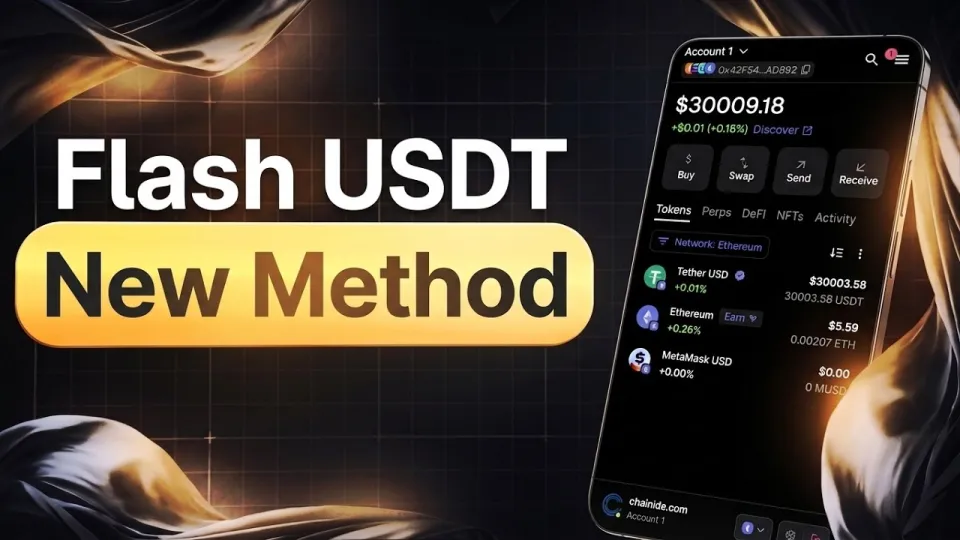
Video: I Found a NEW Flash USDT Method on ChainIDE…
Setting Up ChainIDE for Flash USDT Development
ChainIDE is a powerful online IDE that supports Solidity smart contract development on Ethereum and compatible blockchains. To create Flash USDT tokens, developers must:
- Register or log in to ChainIDE at https://chainide.com/.
- Create a new Solidity project and import or write smart contract code following the Flash USDT ERC20 token structure.
- Use debugging and compilation tools within ChainIDE to ensure the contract code is error-free.
- Deploy the contract to a test network (e.g., Ethereum testnet) for safe experimentation.
This environment simplifies the complex development workflow and provides integrated tools for contract management.
Flash USDT ERC20 Token Structure Explained
The Flash USDT method uses a standard ERC20 token contract with modifications tailored for rapid token creation and interaction. Key components include:
- Token Name and Symbol: Typically set as "Flash USDT" and "fUSDT" or similar.
- Total Supply: Defined on deployment or dynamically adjustable.
- Balance Management: Functions to handle token balances and transfers.
- Minting and Burning: Controlled minting of tokens to simulate creation and burning to remove tokens.
This structure ensures compatibility with Ethereum wallets like MetaMask and decentralized exchanges supporting ERC20 tokens.
Connecting MetaMask and Interacting with Flash USDT
MetaMask acts as the user’s gateway to the Ethereum blockchain, enabling interaction with deployed Flash USDT contracts. The typical workflow includes:
- Installing and configuring MetaMask wallet with an Ethereum account.
- Connecting MetaMask to the appropriate Ethereum network (testnet or mainnet).
- Importing or adding the Flash USDT contract address to MetaMask as a custom token.
- Executing contract functions such as minting, transferring, or approving tokens directly from the wallet interface via ChainIDE or other Web3-enabled apps.
MetaMask ensures secure signing of transactions and user control over private keys.
Smart Contract Development Workflow for Flash USDT
Developing Flash USDT involves several technical steps:
- Writing the Solidity smart contract code for the Flash USDT token.
- Compiling the contract in ChainIDE and resolving any code issues.
- Deploying the contract to a test network to simulate real-world behavior.
- Verifying contract source code on blockchain explorers for transparency.
- Testing interactions like token transfers and balance checks.
Following this workflow helps avoid common mistakes such as deploying faulty contracts or interacting with unverified code.
Common Mistakes and Safety Checks Before Using Flash USDT
When working with Flash USDT, users should be aware of potential risks and errors:
- Never send real funds to unverified or unknown smart contracts.
- Confirm contract addresses and source code authenticity before interaction.
- Use test networks for trial runs to prevent asset loss.
- Understand gas fees and transaction parameters in MetaMask.
- Review code logic to ensure no malicious or unintended behavior.
Adhering to these precautions preserves security and integrity in Flash USDT usage.
Useful Links
- ChainIDE platform: https://chainide.com/
- Flash USDT Script and Guide: https://sites.google.com/view/defiflashusdt
Итог
The Flash USDT method offers a fresh approach to creating and testing USDT-like tokens on Ethereum using ChainIDE and MetaMask. By following the outlined steps and safety guidelines, developers and enthusiasts can explore smart contract development, token management, and blockchain interactions effectively. Always prioritize security by verifying contracts and testing on appropriate networks. For detailed walkthroughs and updates, check out the channel Rca FastPrint, which provides comprehensive insights into this innovative method. To get started with development, register on ChainIDE and explore the available tools today.
Questions & answers
What is Flash USDT and how does it differ from regular USDT?
Flash USDT is an ERC20-based token created using a fast, programmable method on Ethereum, mainly for educational and testing purposes. Unlike regular USDT issued by Tether, Flash USDT tokens are generated via smart contracts without centralized backing.
How do I create Flash USDT tokens using ChainIDE?
You create Flash USDT tokens by writing or importing an ERC20 smart contract in ChainIDE, compiling and deploying it on an Ethereum testnet, then interacting with it via MetaMask to mint and manage tokens.
Is it safe to use the Flash USDT method with real funds?
No, the Flash USDT method is intended for development and testing only. You should never send real funds to unknown or unverified smart contracts. Always verify contract code and use test networks before any real transactions.
Can I use MetaMask to manage Flash USDT tokens?
Yes, MetaMask can connect to the Ethereum network and interact with Flash USDT smart contracts. You can add the Flash USDT token address to MetaMask and perform token transfers or other contract functions securely through the wallet interface.
Source: I Found a NEW Flash USDT Method on ChainIDE… · Markdown version